.png)
Ancestry vs. Race vs. Ethnicity: What’s the Difference and Why It Matters
- Esther Aluko
- Aug 23, 2025
- 4 min read

Updated: Aug 26, 2025
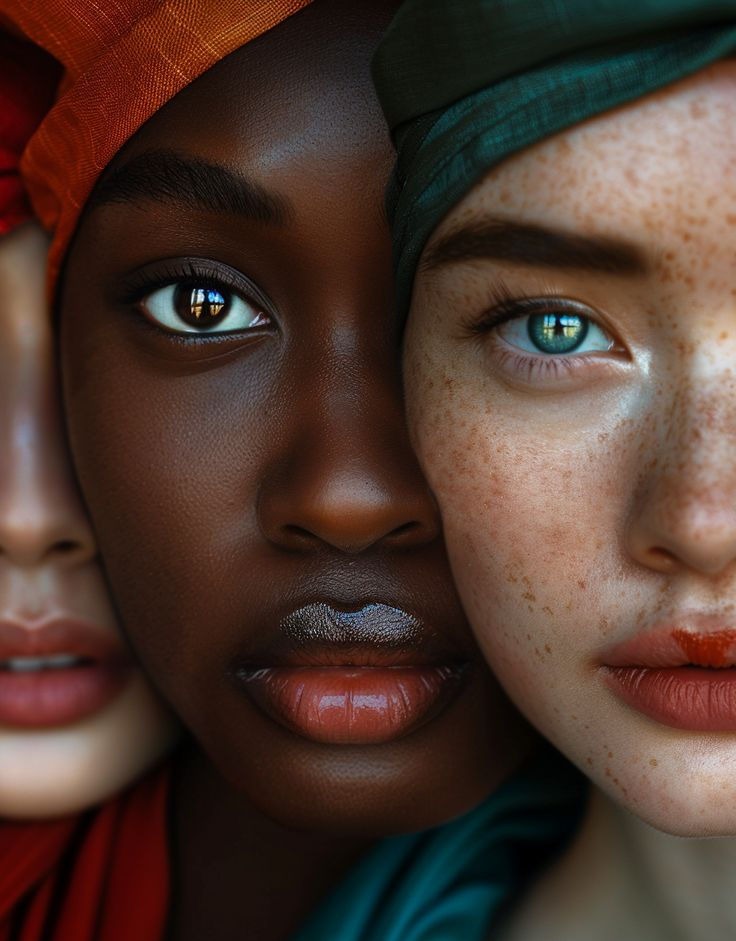
Many people use the words ancestry, race, and ethnicity as if they mean the same thing. But in reality, they carry different meanings, especially in Africa, where identity is shaped by deep cultural traditions, complex histories, and diverse genetics.
Ancestry vs Ethnicity vs Race: understanding the distinctions between these words matters for how we understand our past, interpret DNA results, and navigate social and health realities today.
What is Ancestry?
Ancestry refers to your genetic lineage, i.e, the people from whom you descend. It is rooted in biology and revealed through inherited genetic markers.
Ancestry testing can reveal connections to specific African ethnic groups like the Yoruba in Nigeria, the Akan in Ghana, or the Maasai in Kenya. These results reflect ancient migration patterns, intermarriage, and shared genetic history across regions.
For example, if your ancestry traces back to the Yoruba, it means your DNA carries links to one of West Africa’s most influential cultures, known for its rich traditions, kingdoms, and global diaspora.
Because of Africa’s extraordinary genetic diversity, ancestry results often highlight multiple regions instead of a single origin. This makes African DNA one of the richest sources of human history in the world, offering a wide lens into migration, heritage, and identity.
What is Race?
Race is a socially constructed category that groups people based on perceived physical traits such as skin color, hair texture, or facial features.
While it often appears “biological,” scientists agree that race does not reflect real genetic boundaries. In fact, genetic differences within a so-called “race” can be greater than those between different races.
This shows that race is more about social meaning than scientific fact.
Historically in Africa, race was heavily shaped by colonialism. European powers imposed racial categories that ignored Africa’s cultural complexity, compressing hundreds of ethnic groups into broad racial labels.
In South Africa under apartheid, people were classified into groups like “White,” “Black,” “Colored,” and “Indian,” and those labels dictated every aspect of life, including where people could live, work, and even whom they could marry.
These imposed categories disrupted traditional identities and created long-lasting inequalities.
Although race lacks a strong biological foundation, it has had real consequences.
Racial labels have influenced access to education, land, healthcare, and political rights across the continent.
In the African diaspora, race has shaped how people of African descent are treated in societies built on racial hierarchies. Even today, race continues to impact social status, opportunity, and global perceptions of African people.
What is Ethnicity?
Ethnicity is about shared culture, language, traditions, and identity. Unlike race, which focuses on perceived physical traits and ancestry where your genes come from, ethnicity is tied to belonging to a cultural community.
It is expressed in everyday life through language, values, customs, and collective memory.
In Africa, ethnicity is deeply woven into daily living. It is visible in customs like traditional clothing, music, food, and storytelling.
People may identify as Igbo, Amhara, Fulani, or Zulu, each of which represents a cultural group with a distinct history, social structure, and worldview.
Ethnic identity often carries a sense of pride and belonging that stretches across generations. For example, the Maasai of Kenya and Tanzania are recognized worldwide for their unique attire, oral traditions, and pastoral way of life, which remain central to their identity.
Ethnicity preserves cultural heritage and strengthens bonds within a community. It influences how people celebrate milestones, practice spirituality, and organize family and social life.
In many African societies, ethnicity can sometimes be a source of division when manipulated for political gain; it more often serves as a living link to history.
How Ancestry, Race, and Ethnicity Intersect in Africa

Ancestry tells you where your DNA comes from.
Ethnicity tells you the culture and traditions you belong to.
Race often reflects how society or the wider world chooses to see you.
For example, someone may have ancestry from the Fulani people (genetic markers), identify culturally with the ethnic group of Hausa (through language and lifestyle), but in global racial categories be seen simply as Black. Each label relates to different aspects of identity.
This overlap shows that identity in Africa is layered. Genetics connects you to history, ethnicity connects you to community, and race shapes how others may categorize you socially or politically.
Why This Distinction Matters
For DNA and Heritage: Knowing the difference helps people interpret genetic ancestry results more accurately.
Ancestry tests match your DNA with reference populations. But they have limitations. They do not assign people to races or define ethnicity. Recognizing this prevents misinterpretation and supports more accurate self-understanding.
For Health: Medical research shows that ancestry (genetics) can affect disease risk, while ethnicity (diet, traditions, and environment) influences lifestyle factors.
Also, using race instead of ancestral background to study health can lead to misleading conclusions.
For example, sickle cell traits are better understood through ancestry rather than race. Genetics, environment, and culture all combine to shape disease risk and treatment outcomes.
For Identity: Africans and the diaspora gain power by reclaiming and celebrating both their ancestry and ethnic heritage, rather than being limited by imposed racial labels.
This distinction allows people to explore where their DNA connects them, while also embracing the living traditions, languages, and histories that give meaning to those connections.
It transforms identity from something imposed into something self-defined and empowering.
For Society: Recognizing diversity within Africa challenges stereotypes and honors the continent’s true richness.
Instead of reducing Africa to a single narrative, this distinction highlights the thousands of ethnic groups, languages, and histories that make it the most culturally and genetically diverse continent.
This broader understanding encourages respect, fosters unity without erasing differences, and gives Africans and the diaspora a fuller sense of pride in their shared yet varied heritage.
Conclusion: Ancestry vs Ethnicity vs Race
In Africa, identity is never one-dimensional. Ancestry roots us in our genetic story. Ethnicity connects us to living cultures and traditions.
Race, though socially constructed, influences how we are seen in the world and shapes both our struggles and our triumphs.
By understanding the difference, Africans and the diaspora can embrace a fuller picture of who we are, biologically, culturally, and historically.


Comments